EnterprisePricing


Type a sentence describing an app you want, and get a working version back in minutes. That's what "AI app builder" means in 2026, and it now covers a wider range of tools than it did even a year ago: from fast prompt-to-prototype generators to full platforms that run your team, your clients, and your AI agents on the same system.
The right pick depends on what happens after the demo. Some of these tools are built to get an idea in front of someone fast. Others are built to still be running your operation next year, with real people, inside and outside your company, logging in every day.
TL;DR: the best AI app builders in 2026
- Noloco, best for running your team, your clients, and your AI agents in one governed system, not just a standalone app.
- Lovable and Bolt, best for fast, conversational prototyping.
- Base44, best for generating a quick full-stack app, backend included, from a prompt.
- Glide and Softr, best for lightweight apps built on a spreadsheet or Airtable.
- Before you commit to any of them for real business use, check who else needs to log in, and what they'd be able to see. That question matters more than how fast the demo comes together.
What is an AI App Builder?
An AI app builder is a platform that turns a plain-language description into a working application, without you writing the code by hand. Some generate an app from a single prompt and keep iterating through conversation. Others build AI directly into a visual, structured app builder, so the AI does the busywork (summarizing, classifying, drafting) while the app's data, logic, and permissions stay visible and editable.
Both approaches earn the name today. The difference that actually matters is what the app needs to survive: a one-time demo, or a system that clients, contractors, or teammates depend on next quarter.
What are the best AI App Builders in 2026?
With a growing number of no-code platforms entering the AI space, it can be difficult to decide which solution is right for your business. Each platform brings different strengths depending on your needs, whether you're building internal tools, customer-facing apps, or data-rich workflows. Here’s how they stack up:
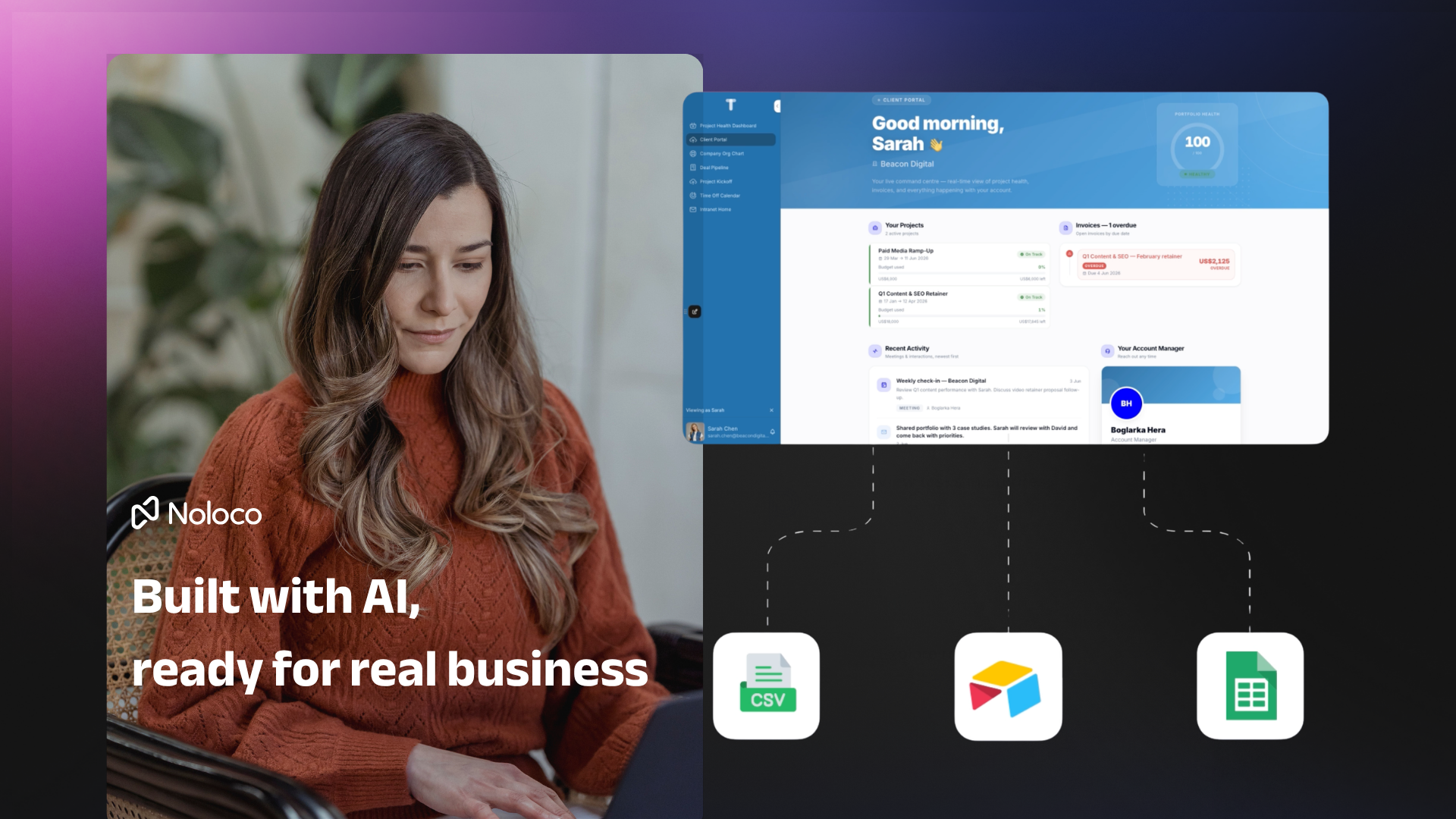
Noloco – Best for team, clients, and agents workflows in one place
Noloco builds AI directly into a governed app platform: your team works in it, your clients log into their own portal, and AI agents get scoped access to exactly the data they need, nothing more. It's built for operations with real complexity, exceptions, handoffs between people and clients, not a flat, one-size-fits-all template. Permissions and governance are built in from the start, so what you build can be handed to your team, or your agents, without becoming a liability.
It's perfect for back-office apps and client portals, among other business uses.
Lovable – Fast for conversational prototyping
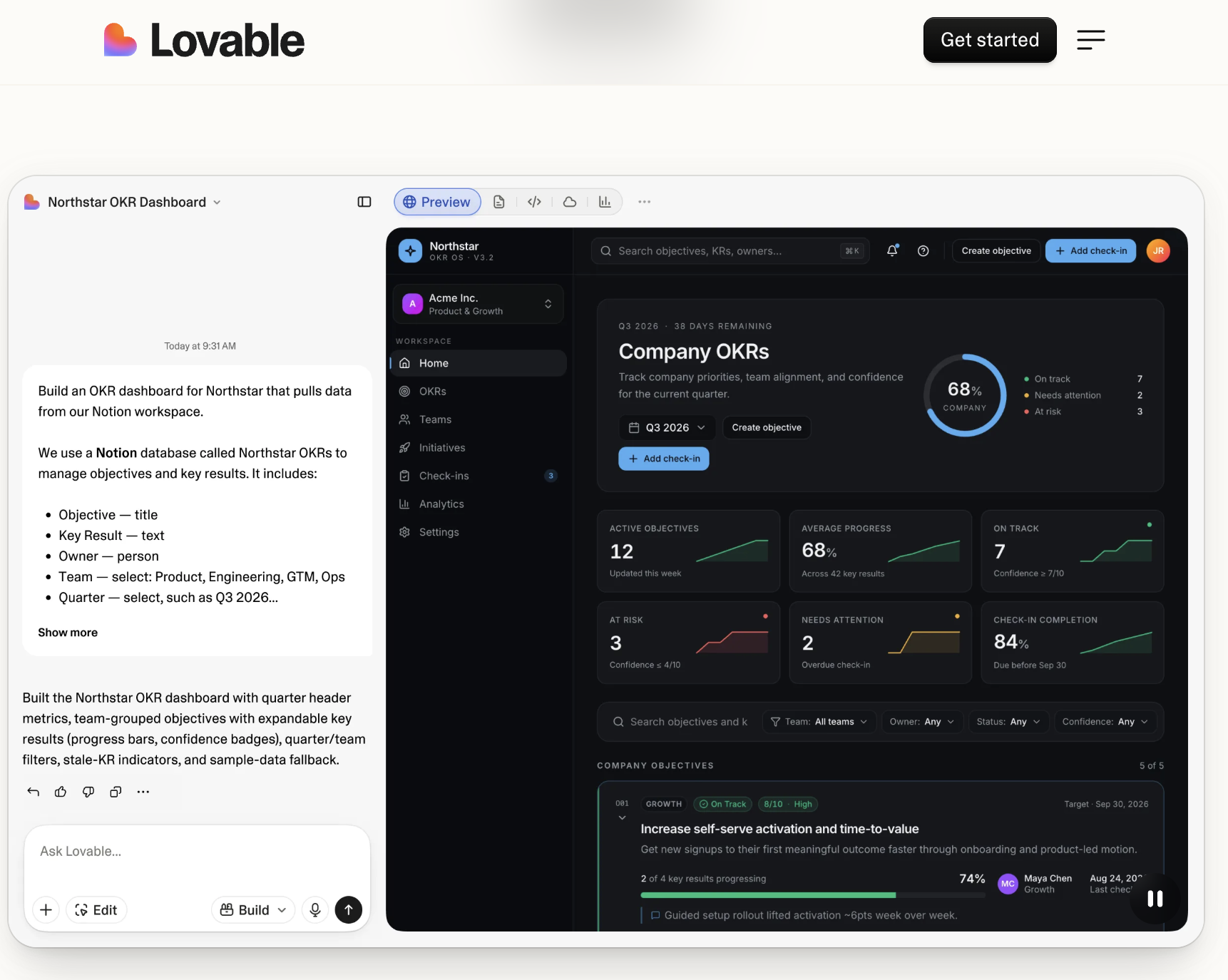
Lovable generates a working app from a text prompt and refines it through conversation. It's a strong choice for getting a visual idea in front of someone quickly, with less focus on the permissions and long-term structure a growing operation eventually needs.
Bolt – Fast, in-browser app generation
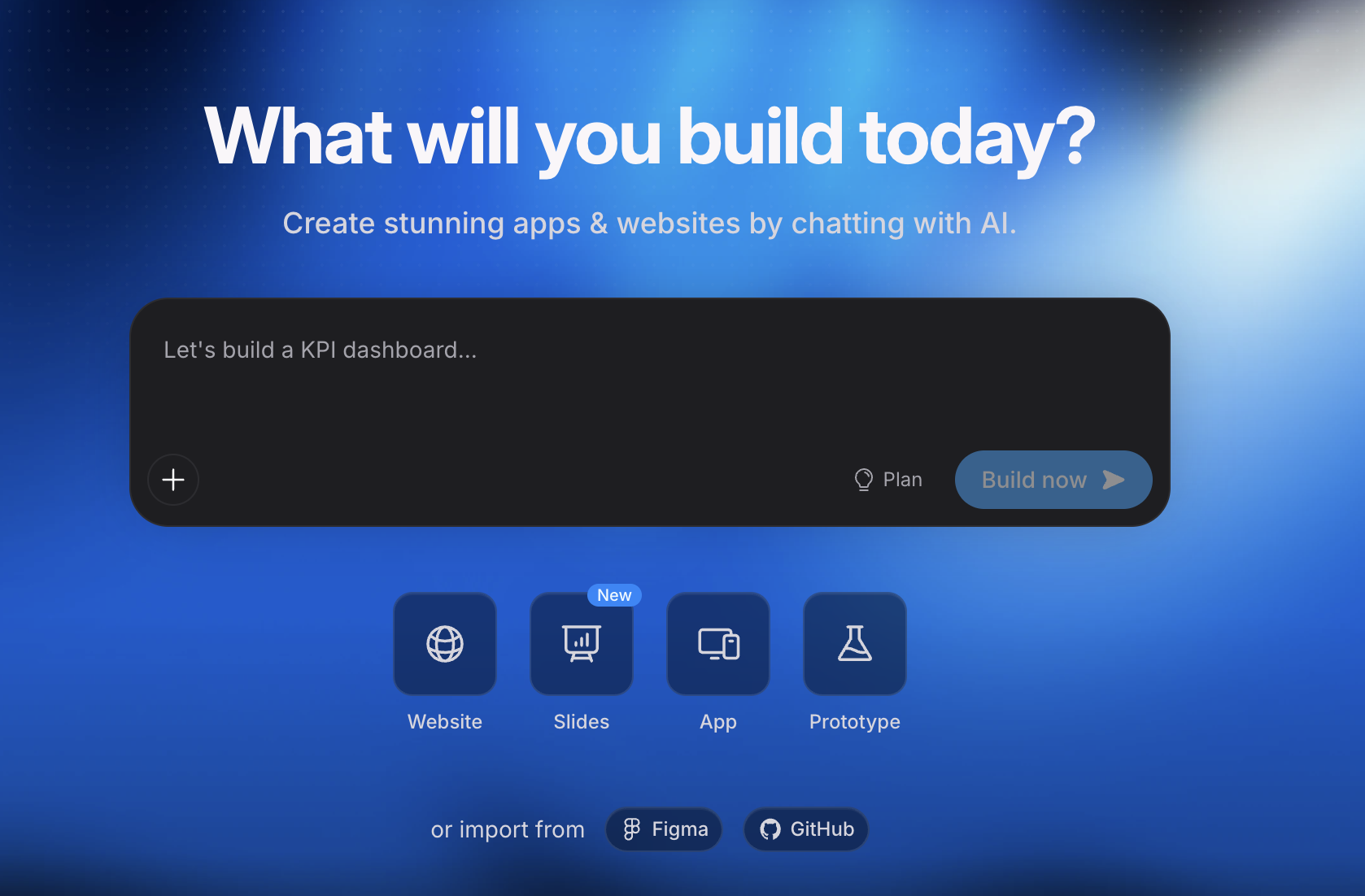
Bolt builds and runs full-stack apps directly in the browser from a prompt. Like Lovable, it's optimized for speed to a working version.
Base44 – Fast full-stack apps from a prompt
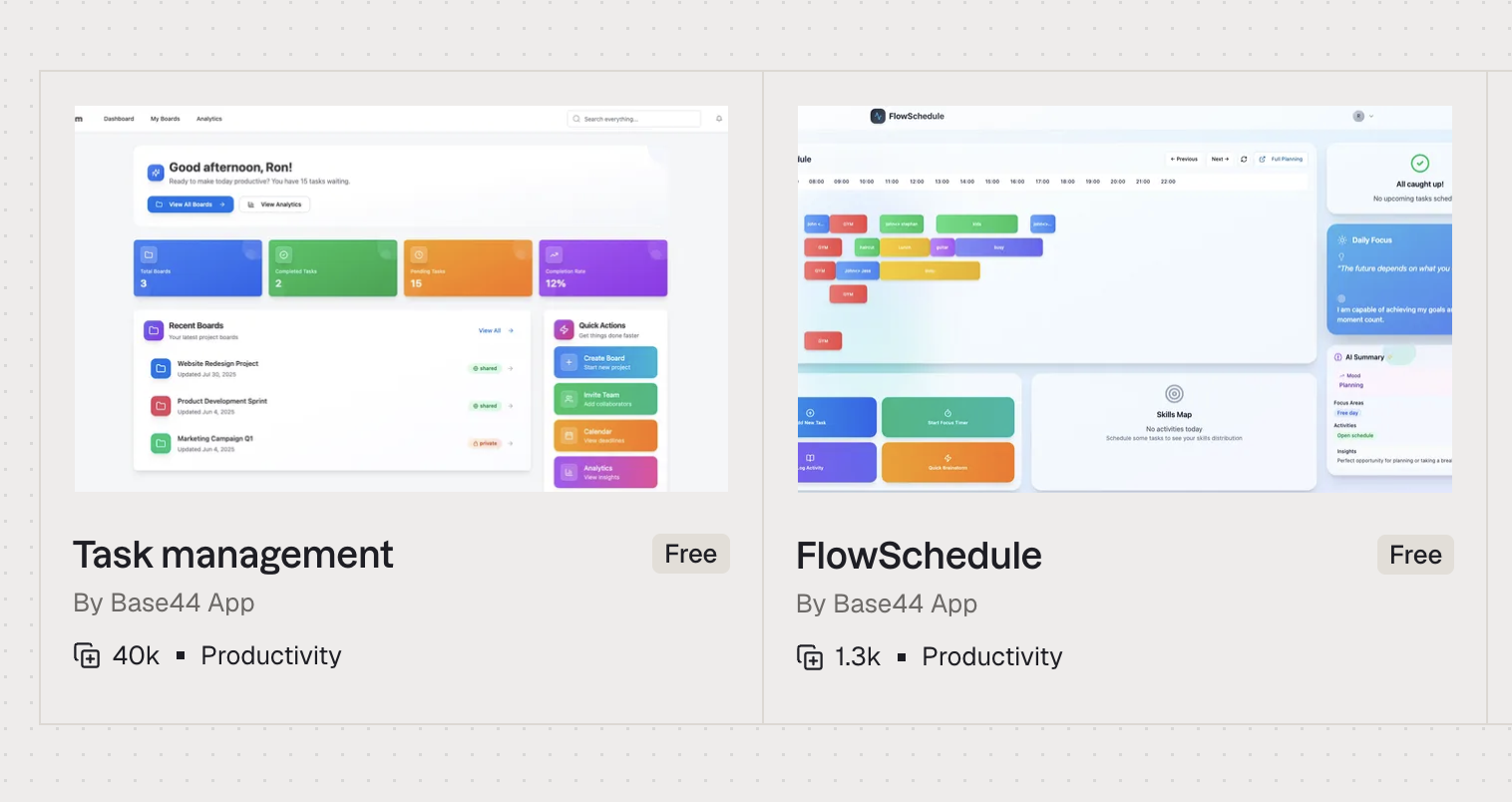
Base44 generates a complete app, including the backend, from a natural-language description. It's a fast way to get from idea to something clickable, aimed more at quick builds than at multi-role, client-facing systems.
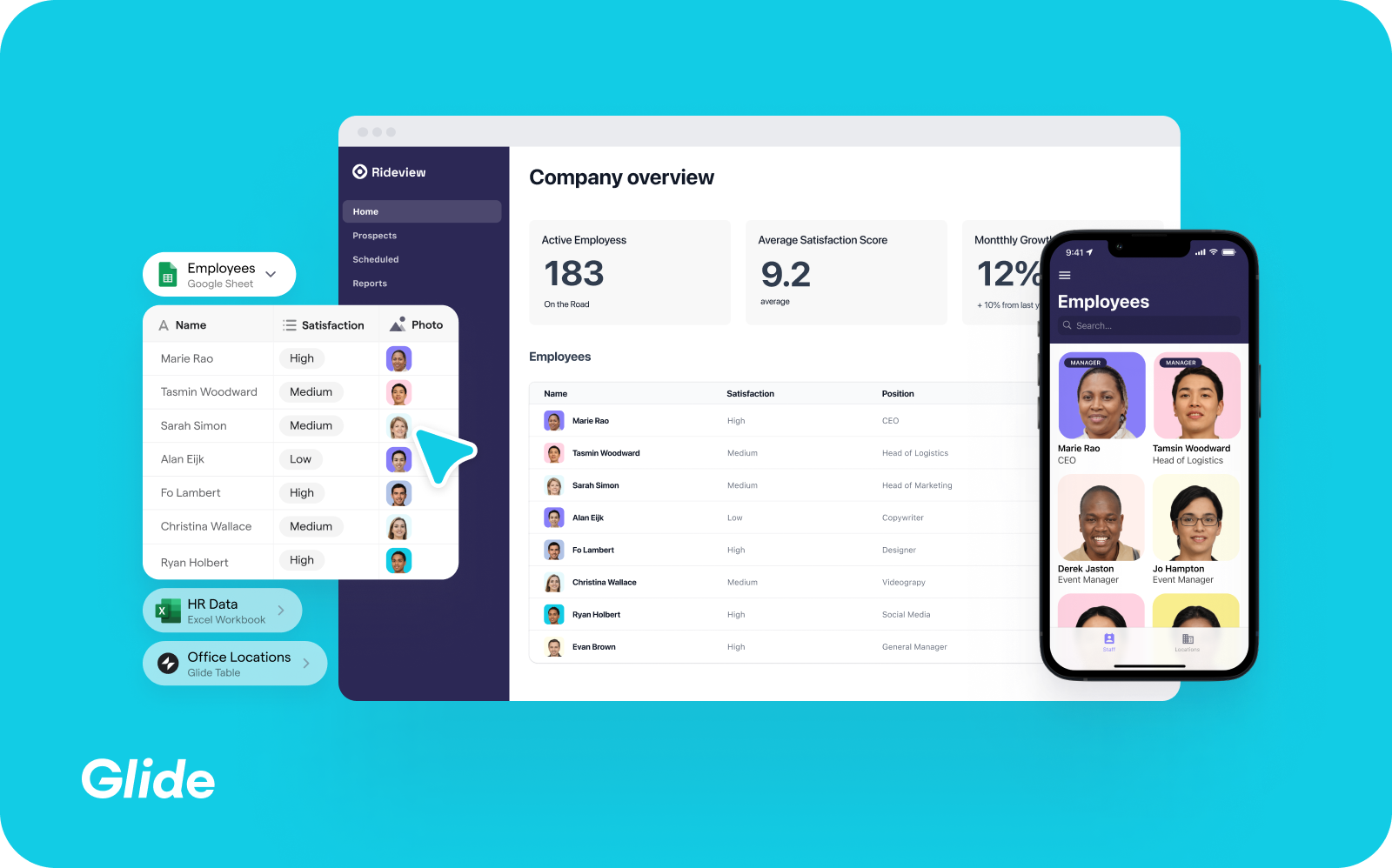
Glide – Good for Lightweight Apps from a spreadsheet
Glide turns a spreadsheet into a simple app with light AI features layered in. It's accessible for beginners, with less room for complex logic or fine-grained permissions. Explore Glide alternatives here.
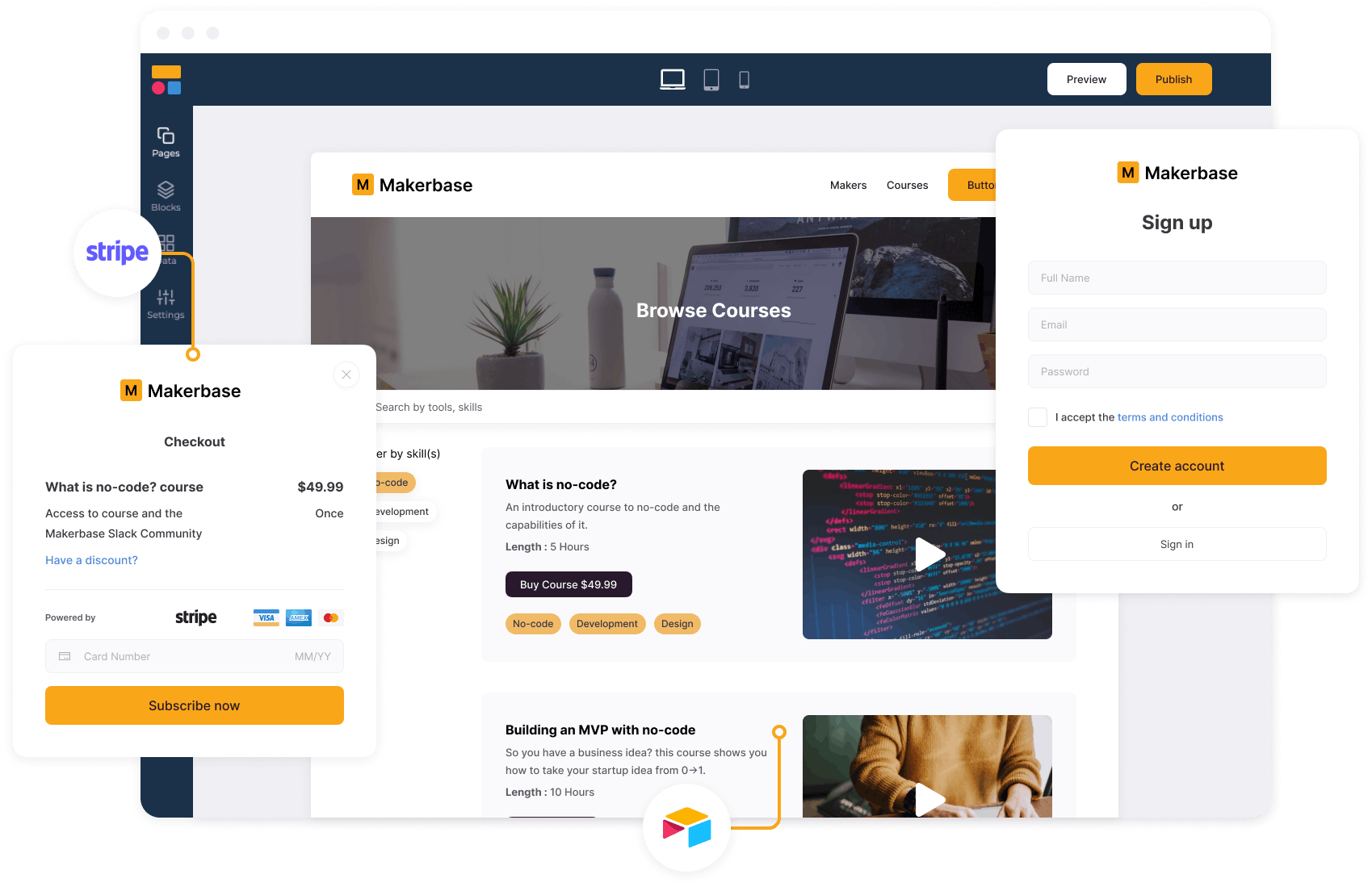
Softr – Good for a fast frontend on Airtable
Softr builds portals and websites on top of Airtable data with AI-assisted setup. It's strong on visual speed, with less depth on backend logic than a full application platform. Read up on some of the best Softr alternatives and choose the right option for you.
What should you check before trusting an AI-generated app with real users?
These are worth asking of any tool on this list, including Noloco, before you put it in front of a client, a contractor, or an AI agent.
- Can two different people log in and see two different things, based on their role? A prompt-generated app often starts as a single view for a single user.
- If an AI agent gets access, does it see everything in the system, or only the specific data it's scoped to?
- Who can change it in six months when your process shifts? Some AI-generated apps are quick to create and slow to modify without rebuilding.
- What happens to security once the demo becomes a real tool? Across the models tested for Veracode's 2026 GenAI Code Security Report, AI code generation tasks introduced a risky vulnerability 44% of the time, and the average pass rate has barely moved in a year, 56% in 2026 versus 55% in 2025 (Veracode, 2026). That's a general figure across coding tasks, not specific to any tool on this list, but it's a fair reason to check rather than assume.
How do you pick between these for a real operation, not just a demo?
- If the process has real exceptions, handoffs, or steps that change by job, look for a platform flexible enough to match it, not one that forces your process into a template.
- If clients, partners, contractors, or field staff need their own access, that has to be built in from the start, not patched on later.
- If you're planning to connect AI agents to your data, check whether they can be scoped to exactly what they should see, rather than getting the same access as an admin.
- If one person owns keeping this running, whether that's a founder or an ops lead, make sure they can adjust it themselves without needing a developer for every change.
- If you're prototyping something you'll show once and move on from, the fastest conversational tool is the right call. Save the governed platform for what has to last.
Final thoughts
"Best AI app builder" isn't one answer anymore. For a fast prototype, the conversational tools on this list are genuinely good at their job. For a system your team, your clients, and increasingly your AI agents all need to work inside safely, the questions above matter more than how quickly the first version comes together.
FAQs about the Best AI App Builders in 2026
Is Noloco an AI app builder?
Yes. Noloco builds AI into a governed app platform, so apps you create come with permissions, client access, and agent scoping already in place, rather than needing those added afterward.
What's the difference between Lovable, Bolt, and Base44?
All three generate a working app from a text prompt. Lovable and Bolt lean toward fast, conversational iteration, Bolt in-browser specifically. Base44 focuses on generating a complete app, including the backend, in one pass. None of the three are built specifically around multi-role permissions or client-facing access.
Do AI app builders require coding knowledge?
No, for any of the tools on this list. Getting from a working prototype to something production-ready for real users sometimes benefits from technical review, depending on the tool.
Can I use more than one of these together?
Yes. A common pattern is prototyping a specific screen or idea quickly in a conversational tool, then rebuilding or embedding it inside a platform that already handles login, permissions, and client data.
What should I check before giving an AI agent access to a business app?
Whether the agent can be scoped to only the data it needs, rather than inheriting the same access as a full user. That distinction matters more as more tools add agent connections.
Related resources
Author


Our recent posts
Explore all blog posts
Your most common
questions—answered!
Who is Noloco best suited to?
+
-
Noloco is perfect for small to medium-sized service businesses like consultancies, agencies, advisory firms, as well as engineering and industrial services such as energy, construction, or any other operations-focused fields.
Do I need tech experience to use the platform?
+
-
Not at all! Noloco is designed especially for non-tech teams. Simply build your custom system using a drag-and-drop interface. No developers needed!
Is my data secure?
+
-
Absolutely! Security is very important to us. Our access control features let you limit who can see certain data, so only the right people can access sensitive information
Do you offer customer support?
+
-
Yes! We provide customer support through various channels—like chat, email, and help articles—to assist you in any way we can.
My business is growing fast—can Noloco keep up?
+
-
Definitely! Noloco makes it easy to tweak your system as your business grows, adapting to your changing workflows and needs.
Is there any training or support available to help my team get up to speed?
+
-
Yes! We offer tutorials, guides, and AI assistance to help you and your team learn how to use Noloco quickly.
Can I make changes to my app after it’s been created?
+
-
Of course! You can adjust your app whenever needed. Add new features, redesign the layout, or make any other changes you need—you’re in full control.

Ready to boost
your business?
Build your custom tool with Noloco